Revenue Pathways for Coconut Shell Charcoal Production Projects
Coconut shell is widely recognized as one of the most valuable biomass resources for charcoal production. Its naturally high lignin content, dense structure, and relatively low ash level enable the production of charcoal with excellent fixed carbon, mechanical strength, and calorific value. These characteristics have made coconut shell charcoal an important raw material for multiple industrial and consumer markets.
However, the commercial success of a coconut shell charcoal project depends on more than producing a quality product. Long-term profitability is determined by the ability to develop multiple revenue streams, optimize resource utilization, and adapt products to different market requirements.
Rather than relying on a single end use, modern charcoal production projects increasingly generate value through diversified product portfolios, by-product utilization, and integrated biomass processing strategies.
Producing High-Value Charcoal for Industrial Markets
The primary source of revenue is naturally the sale of coconut shell charcoal itself. Compared with charcoal derived from many other biomass materials, coconut shell charcoal offers high carbon density and low impurity levels, making it suitable for demanding industrial applications.
Industrial users often require consistent particle size, stable fixed carbon content, low volatile matter, and predictable combustion performance. Maintaining these quality parameters enables producers to access higher-value market segments instead of competing solely on production volume.
Depending on local demand, charcoal may serve applications in metallurgy, industrial heating, filtration media production, or carbon material manufacturing. Product consistency often commands greater commercial value than maximum production capacity alone.
Quality assurance through standardized production and laboratory testing strengthens customer confidence and supports long-term supply agreements.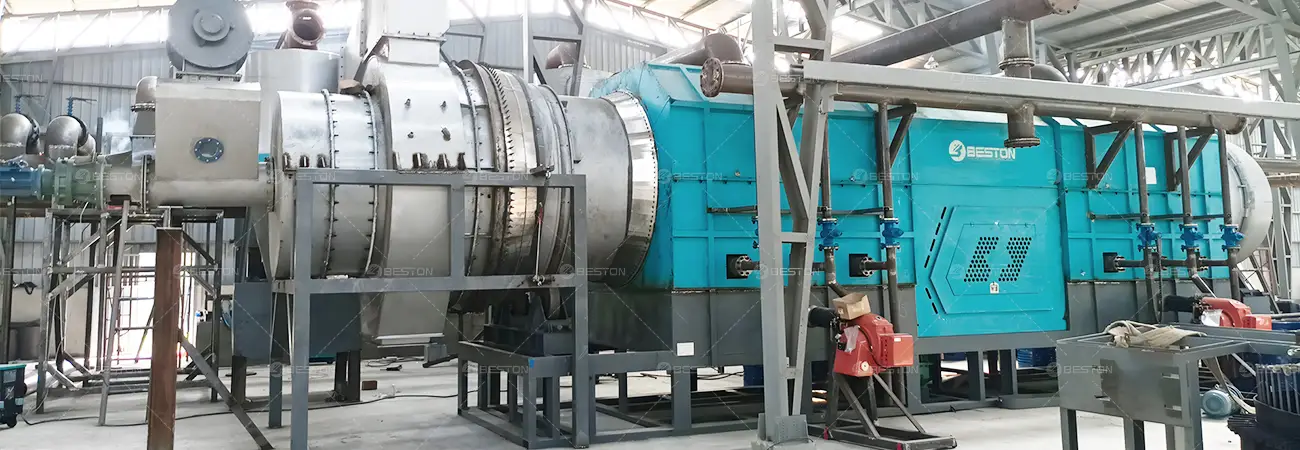
Expanding into the Barbecue Charcoal Market
One of the largest commercial applications for coconut shell charcoal is barbecue fuel. Consumers generally value charcoal that burns for extended periods, produces stable heat, generates relatively little smoke, and leaves minimal ash after combustion.
Because coconut shell naturally possesses a dense cellular structure, properly carbonized material can satisfy many of these performance expectations.
Additional processing such as grading, crushing, screening, and briquette production can further enhance commercial value. Briquetted charcoal often provides improved handling characteristics, consistent dimensions, and greater convenience for transportation and retail distribution.
Although consumer markets can be highly competitive, product differentiation through quality, packaging, and brand positioning may increase overall project profitability.
Creating Value Through Activated Carbon Production
For many producers, the greatest economic opportunity extends beyond charcoal itself.
Coconut shell charcoal is one of the preferred raw materials for manufacturing activated carbon because of its well-developed carbon structure and favorable pore characteristics after activation.
Activated carbon commands significantly higher market value than conventional charcoal due to its application in water purification, air treatment, food processing, precious metal recovery, and industrial adsorption.
Entering the activated carbon supply chain requires additional processing facilities and technical expertise, but it also creates opportunities for greater value addition.
For some projects, charcoal production becomes the intermediate stage within a broader carbon materials business rather than the final commercial product.
Utilizing Pyrolysis Gas for Energy Savings
During charcoal production, thermal decomposition generates combustible gases containing hydrogen, methane, carbon monoxide, and light hydrocarbons.
Instead of treating these gases as waste, modern production systems can recover and utilize them as internal process fuel.
Recycling combustible gas reduces dependence on external energy sources and lowers operating costs. Although this may not generate direct revenue through product sales, it significantly improves project profitability by reducing fuel expenditure.
Higher thermal efficiency also contributes to more stable production conditions and improved environmental performance.
Recovering Condensable By-Products
Depending on the production technology, charcoal manufacturing may also generate condensable liquid fractions, including wood vinegar and heavier organic compounds.
Wood vinegar has attracted attention in agricultural, industrial, and specialty applications, subject to regional regulations and product quality standards.
Although revenue from these by-products may represent a relatively small proportion of total project income, recovering rather than discarding them improves overall resource utilization.
The commercial feasibility depends on market demand, purification requirements, and transportation economics.
Developing Carbon Removal Opportunities
As voluntary carbon markets continue to evolve, some charcoal production technologies may be adapted to produce biochar suitable for long-term carbon storage rather than conventional fuel charcoal.
Where production processes, feedstock sourcing, and product applications satisfy applicable carbon accounting methodologies, carbon removal projects may generate additional revenue through carbon credit issuance.
This pathway generally requires more comprehensive monitoring, documentation, and third-party verification than conventional charcoal production.
Nevertheless, integrating carbon management into biomass conversion may provide new commercial opportunities for projects targeting environmental markets alongside traditional product sales.
Strengthening Profitability Through Operational Efficiency
Revenue growth should be complemented by continuous cost optimization.
Stable feedstock procurement, efficient reactor operation, reliable equipment maintenance, and optimized logistics all improve project economics.
Automation can reduce labor requirements while improving production consistency. Heat recovery systems lower energy consumption, and preventive maintenance minimizes unexpected downtime.
Process stability also improves product uniformity, allowing producers to meet premium market specifications more consistently.
Operational excellence therefore supports both cost reduction and revenue enhancement.
Building a Diversified Charcoal Business Model
The profitability of a coconut shell charcoal project depends on creating value across the entire production chain rather than focusing exclusively on charcoal output.
Industrial charcoal, barbecue fuel, activated carbon feedstock, condensable by-products, internal energy recovery, and potential carbon market participation each represent distinct revenue opportunities. The optimal combination depends on feedstock availability, production technology, regional demand, and long-term business strategy.
By integrating efficient biomass conversion with diversified market positioning, coconut shell charcoal projects can improve resilience against price fluctuations while maximizing the economic potential of agricultural residue. This diversified approach transforms coconut shell from a discarded by-product into a versatile carbon resource capable of supporting sustainable industrial development and long-term commercial growth.